
For years, dashboards have been the centerpiece of IoT deployments.
Organizations proudly display colorful graphs showing temperatures, energy consumption, water levels, machine status, or fleet locations. While dashboards are useful for visualizing data, they are rarely the reason an IoT project succeeds.
The real value of IoT begins after the data is collected.
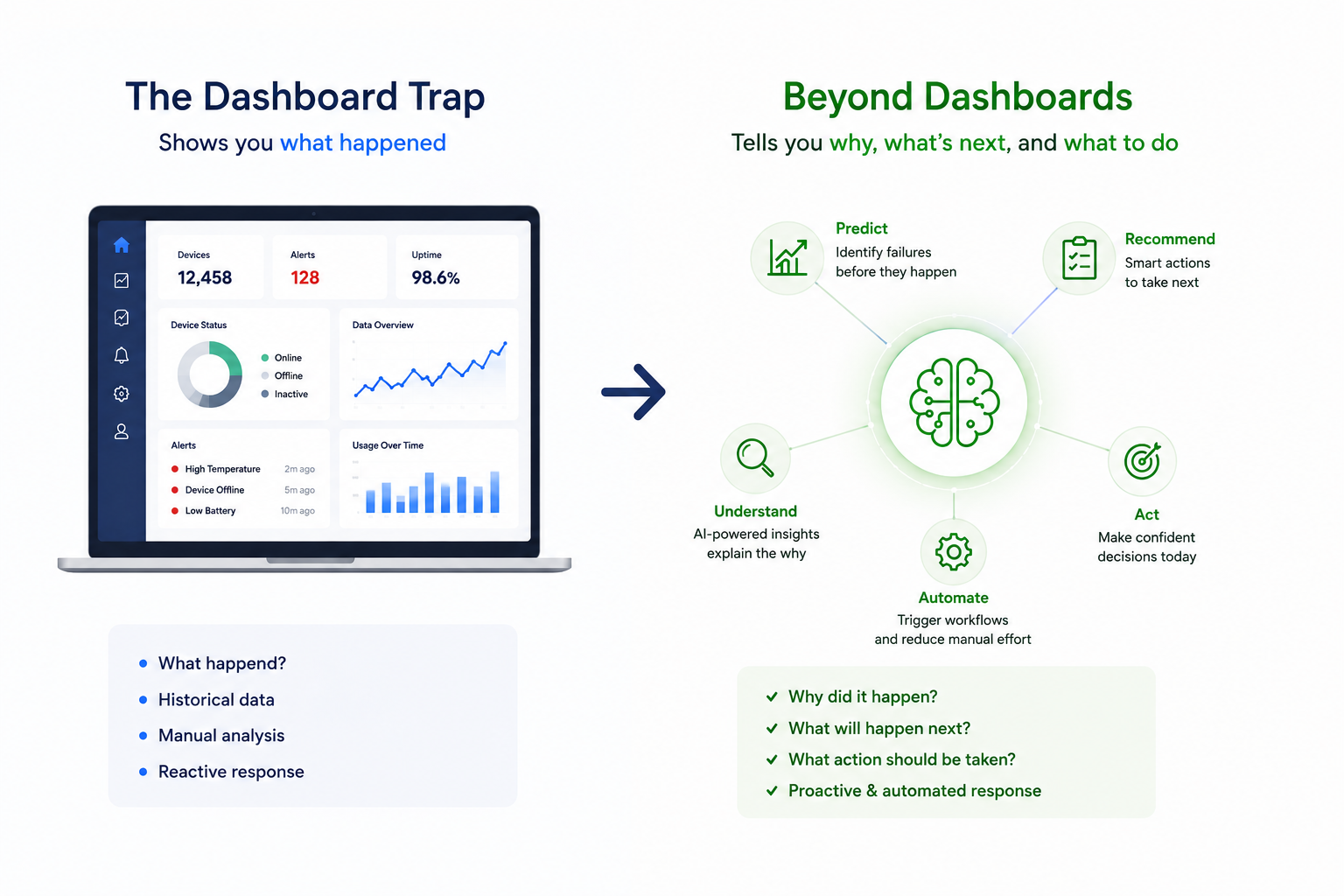
The Dashboard Trap
Many IoT initiatives generate massive amounts of sensor data but struggle to answer the questions that truly matter:
- Which devices are likely to fail next?
- Which customers need immediate attention?
- What actions should be automated?
- How can operations become more efficient?
- What business decisions should be made today?
A dashboard can tell you what happened.
A modern IoT platform should tell you why it happened, what will happen next, and what action should be taken.
IoT Has Entered the AI Era
Today’s enterprises expect far more than visualization.
They need platforms that can:
- Detect anomalies automatically
- Predict equipment failures
- Generate intelligent reports
- Recommend corrective actions
- Automate workflows
- Assist operators using natural language
- Integrate seamlessly with ERP, CRM, GIS, and business applications
Instead of spending hours analyzing graphs, teams should be able to ask:
“Which water meters have abnormal consumption today?”
or
“Generate a maintenance report for all gateways with poor connectivity.”
AI should deliver the answer in seconds.
Device Management Is Equally Important
An IoT deployment doesn’t end when devices are installed.
Thousands—or even millions—of connected devices require continuous management throughout their lifecycle.
A successful platform should simplify:
- Device onboarding
- Remote provisioning
- Firmware updates
- Configuration management
- Health monitoring
- Diagnostics
- Security management
- Multi-tenant operations
Without strong device management, dashboards become little more than monitoring screens while operational costs continue to rise.
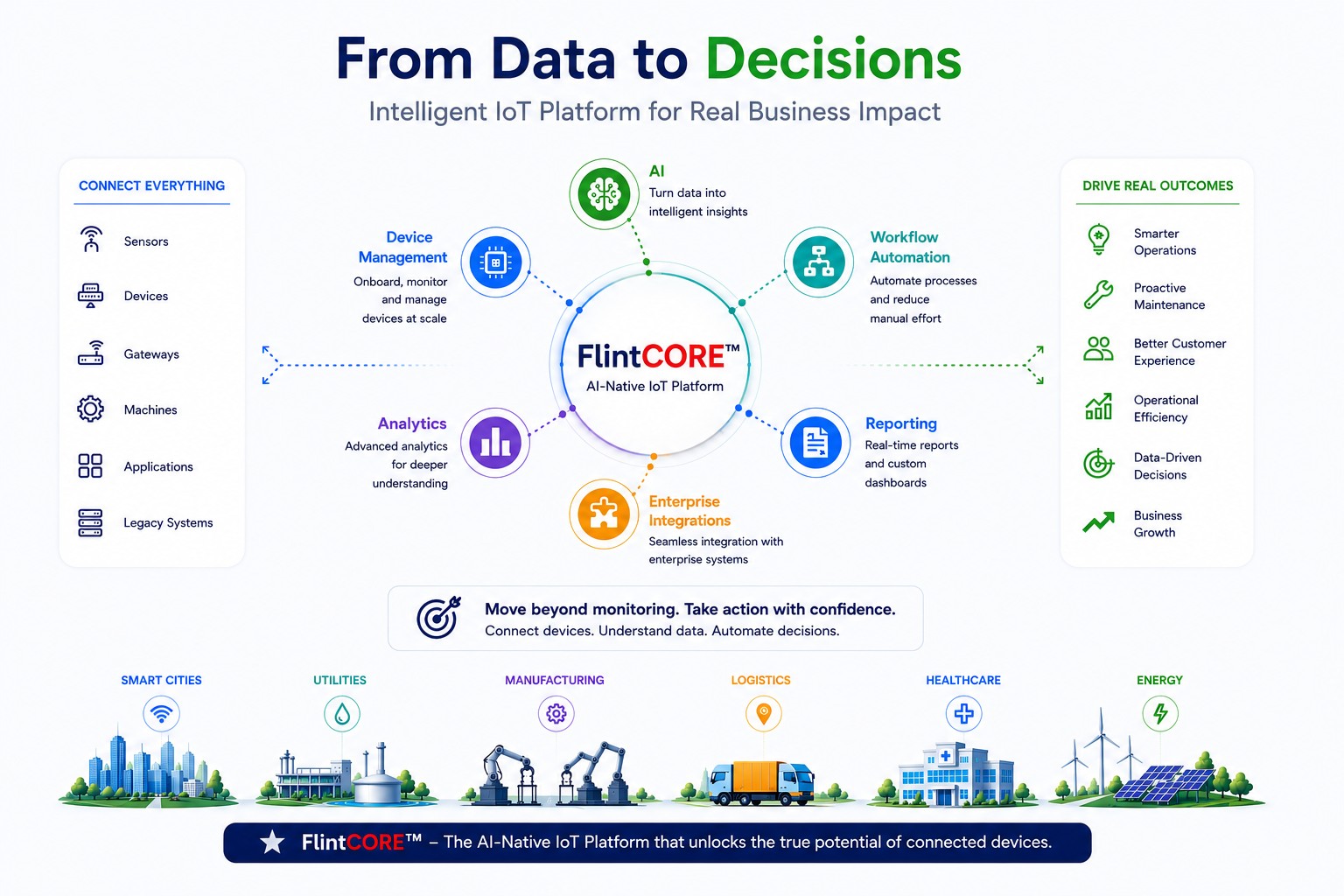
From Data to Decisions
The next generation of IoT platforms must transform raw data into business intelligence.
This means combining:
- AI
- Device Management
- Workflow Automation
- Analytics
- Reporting
- Enterprise Integrations
When these capabilities work together, organizations move beyond monitoring to making faster, smarter, and more informed decisions.
The Future of IoT
Across smart cities, utilities, manufacturing, logistics, healthcare, and energy, organizations are looking for measurable business outcomes—not just data visualization.
The future belongs to platforms that can connect devices, understand data, automate decisions, and help businesses act with confidence.
Dashboards will always have a place.
But successful IoT projects are no longer measured by the quality of their dashboards.
They are measured by the business value they create.
At OrbiWise, we believe the future of IoT lies in intelligent platforms that combine AI, scalable device management, and enterprise-grade automation. That’s the vision behind FlintCORE™—helping organizations move beyond dashboards and unlock the true potential of connected devices.